About Bonnie
I know first-hand what it means to rebuild your life from the inside out. My path began long before I ever trained — shaped by real experiences, real adversity, and the deep understanding that healing has to be both compassionate and powerful.
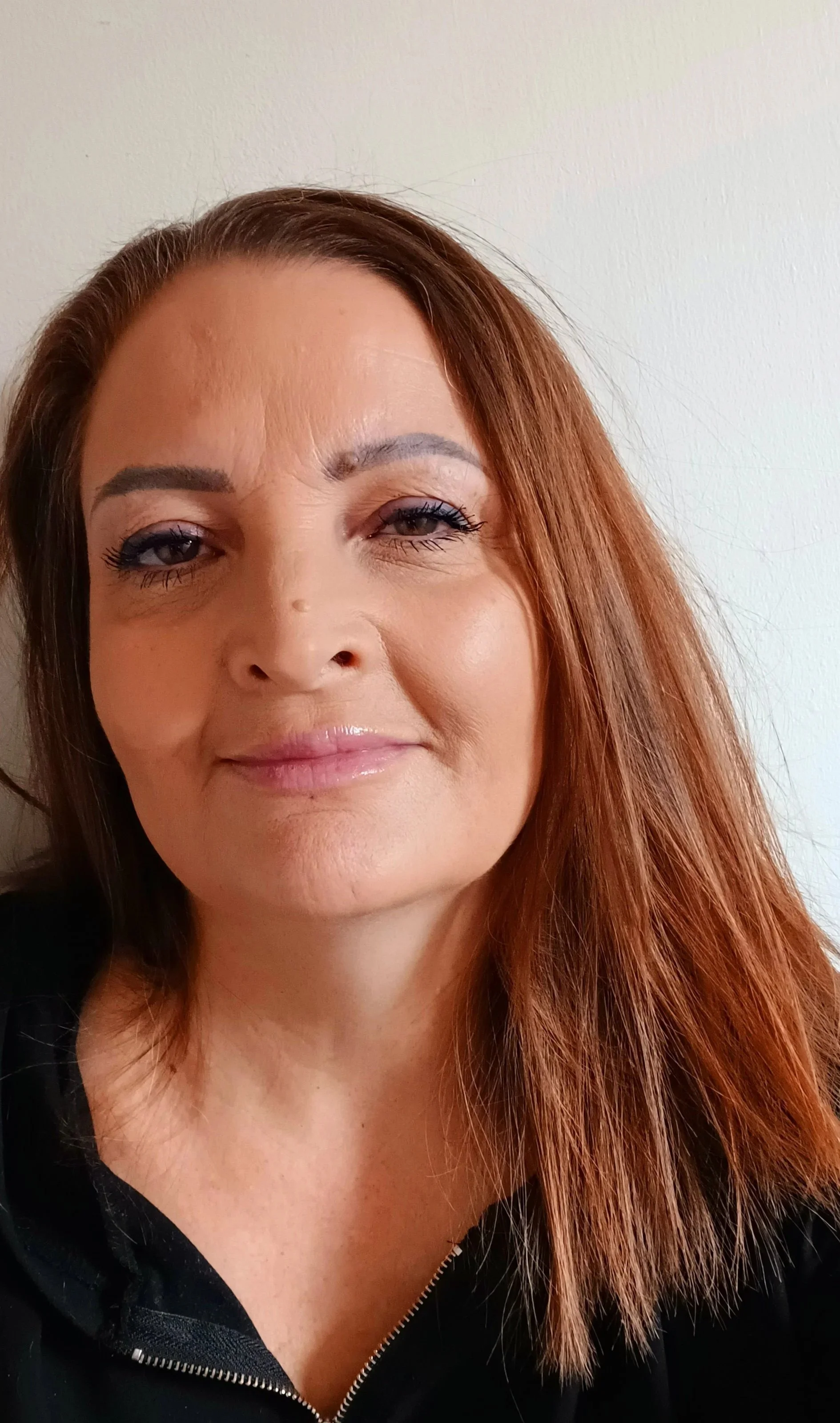
The journey that brought me here
I settled down young and became a mother of four, navigating births that ranged from straightforward to deeply traumatic. After my first baby, I spent ten days in hospital recovering from surgery. My third birth was so frightening that I genuinely believed I might not survive it.
As the years went on I realised I had outgrown my first marriage — not in a material sense, but I wanted more life, more purpose. We divorced, and I began training as a counsellor. Eventually, I remarried.
What followed was emotional abuse that slowly stripped away my confidence and sense of self. The night we separated, the police removed him from the house after he assaulted both me and my son.
And yet, despite everything, a small part of me refused to stay broken. I found myself drawn into the care sector — children's homes, hostels, mental health services, drug and alcohol support, and youth justice. This rebuilt my self-worth and my belief in myself, piece by piece.
Along the way, I found hypnosis. And for the first time in years, the fear left my body. Not "managed," not "coping" — it lifted. I felt lighter, safer, and more myself than I had in a very long time.
So I trained. I went deep. And I kept learning. Today I help clients release trauma and change emotional patterns — without years of talking. My role is simple: to help your mind let go of what it no longer needs, and help you step into the version of yourself you were always capable of being.
My intention is simple: to make healing accessible, compassionate, and powerful — for anyone who's tired of simply coping.
The techniques I use
A powerful combination of approaches that work with the subconscious mind to create rapid, lasting change.
Hypnotherapy
Guided deep-state work that re-patterns beliefs and responses held in the subconscious.
IEMT
Integral Eye Movement Technique — rapidly neutralises the emotional charge attached to distressing memories.
BLAST Technique
Bi-Lateral Analysis and Stimulation Treatment for trauma, PTSD and deeply held emotional patterns.
Bunny Talks Process
A gentle, playful framework for children to resolve fears and emotional difficulties safely.
Frequently asked questions
About Hypnotherapy
Hypnotherapy guides you into a trance-like state of deep relaxation and focused attention, making the subconscious mind more open to positive suggestions that can help change thoughts, feelings and behaviours.
Absolutely not. You're fully aware and in control throughout. You can hear everything, decline suggestions and stop at any time. You always retain full power to exit.
No. Hypnosis requires your willing consent and you can always emerge from a trance. There are no cases of people being "stuck." You must be willing and you always retain full control.
Most people describe it as a deep daydream or meditative state — relaxed, deeply focused, with a sense that time has slowed. Similar to being completely absorbed in a film or a creative activity.
Most people who are willing and able to focus can be hypnotised. Openness and intention are the key ingredients.
Hypnotherapy is generally very safe. Rarely, people experience mild headache or grogginess afterwards. It should always be carried out by a qualified practitioner.
Common uses include anxiety, stress, phobias, pain management, sleep issues, confidence, depression, PTSD, habit change, grief and IBS — with research showing up to 70% improvement for some conditions.
About IEMT
Integral Eye Movement Technique uses precise eye movements to help process and release emotional trauma, unpleasant emotions and firmly held beliefs. It draws on principles from EMDR and cognitive restructuring.
IEMT can help with PTSD, phobias, anxiety, depression, low self-esteem, anger, limiting beliefs, grief and loss. It can also be used to improve performance — breaking through mental barriers in sport or business.
Both use eye movements as a therapeutic tool. IEMT addresses a broader range of issues including emotional patterns and self-perception, while EMDR is primarily focused on processing specific traumatic memories.
About the BLAST Technique
The BLAST Technique helps clients revisit a traumatic experience whilst stimulating normal communication between the hemispheres of the brain. This allows the brain to reprocess the experience — so you can remember it without the same physical or emotional response.
You don't need to share any details of your experience. The practitioner facilitates the reprocessing whilst you revisit the memory internally. The emotional response can be altered very quickly using this technique.
It is excellent for PTSD, complex PTSD and trauma from: sexual or physical assault, child abuse, narcissistic relationship abuse, natural disasters and life-threatening diagnosis. It also helps with anxiety, depression, phobias, addictions, insomnia, grief, bereavement, relationship breakdowns, anger, guilt and shame.