About Bonnie
I know first-hand what it means to rebuild your life from the inside out. My path began long before I ever trained — shaped by real experiences, real adversity, and the deep understanding that healing has to be both compassionate and powerful.
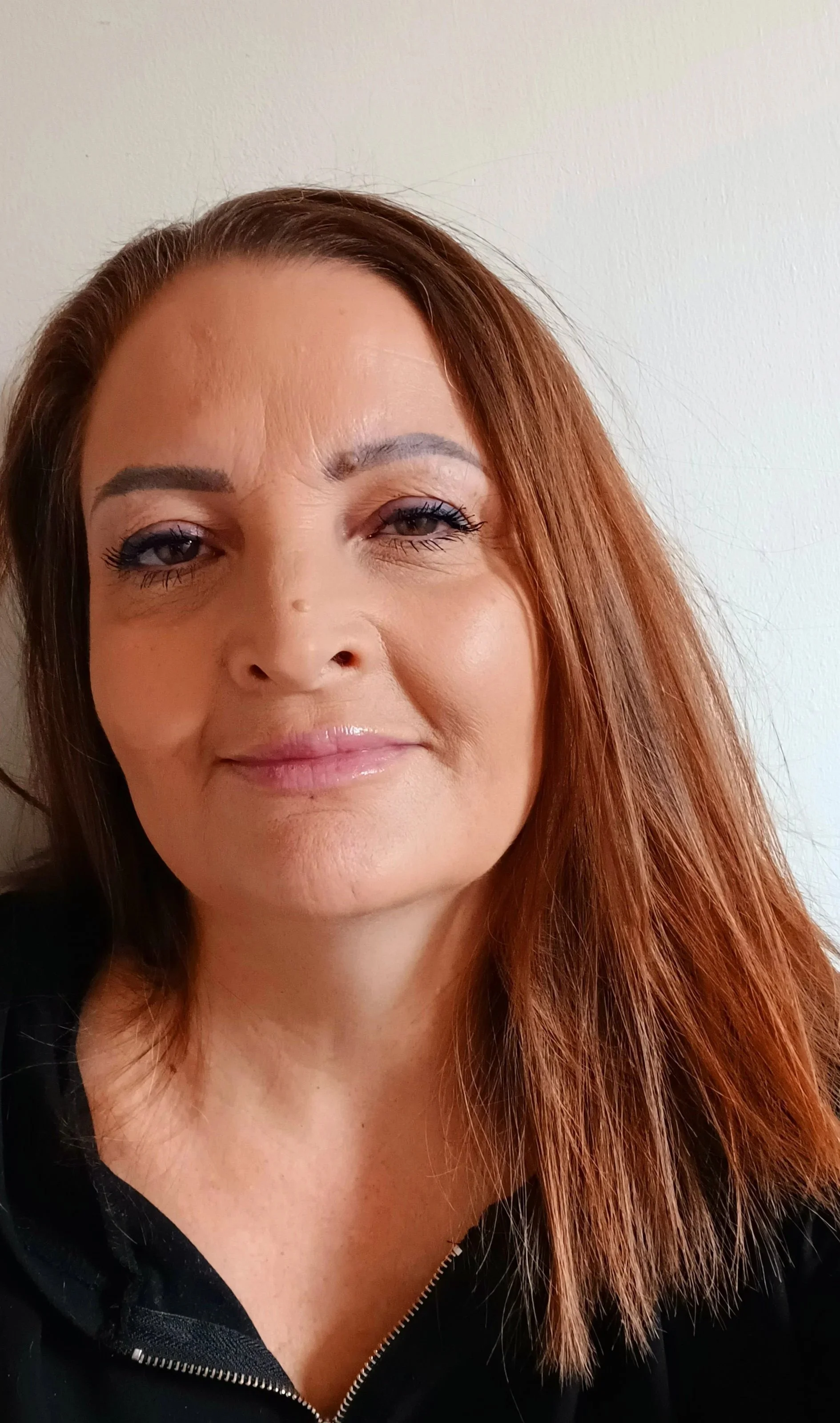
The journey that brought me here
I settled down young and became a mother of four, navigating births that ranged from straightforward to deeply traumatic. After my first baby, I spent ten days in hospital recovering from surgery. My third birth was so frightening that I genuinely believed I might not survive it.
As the years went on I realised I had outgrown my first marriage — not in a material sense, but I wanted more life, more purpose. We divorced, and I began training as a counsellor. Eventually, I remarried.
What followed was emotional abuse that slowly stripped away my confidence and sense of self. The night we separated, the police removed him from the house after he assaulted both me and my son.
And yet, despite everything, a small part of me refused to stay broken. I found myself drawn into the care sector — children's homes, hostels, mental health services, drug and alcohol support, and youth justice. This rebuilt my self-worth and my belief in myself, piece by piece.
Along the way, I found hypnosis. And for the first time in years, the fear left my body. Not "managed," not "coping" — it lifted. I felt lighter, safer, and more myself than I had in a very long time.
So I trained. I went deep. And I kept learning. Today I help clients release trauma and change emotional patterns — without years of talking. My role is simple: to help your mind let go of what it no longer needs, and help you step into the version of yourself you were always capable of being.
My intention is simple: to make healing accessible, compassionate, and powerful — for anyone who's tired of simply coping.
The techniques I use
A powerful combination of approaches that work with the subconscious mind to create rapid, lasting change.
Guided deep-state work that re-patterns beliefs and responses held in the subconscious.
Integral Eye Movement Technique — rapidly neutralises the emotional charge attached to distressing memories.
Bi-Lateral Analysis and Stimulation Treatment for trauma, PTSD and deeply held emotional patterns.
A gentle, playful framework for children to resolve fears and emotional difficulties safely.
Frequently asked questions
About Hypnotherapy
Hypnotherapy is a structured, collaborative process in which a trained therapist uses guided relaxation, focused attention and therapeutic suggestion to help you work with your thoughts, feelings and behaviours at a deeper level. You are always aware, always in control, and always a willing participant — nothing happens without your knowledge or consent. It is not sleep, and it is not the stage show version you may have seen on television. Think of it as a purposeful, calm state of inner focus — one that makes it easier for the mind to process, release and change.
Absolutely not. You're fully aware and in control throughout. You can hear everything, decline suggestions and stop at any time. You always retain full power to exit.
In a clinical setting, hypnotherapy is always a consensual, collaborative process — nothing therapeutic can be achieved without your willing participation. You remain aware throughout and can end the session at any time. There are no recorded cases of anyone becoming stuck — if a session were interrupted for any reason, you would simply return to your normal waking state naturally.
Most people describe it as a deep daydream or meditative state — relaxed, deeply focused, with a sense that time has slowed. Similar to being completely absorbed in a film or a creative activity.
Most people who are willing and able to focus can be hypnotised. Openness and intention are the key ingredients.
Hypnotherapy is generally very safe. Rarely, people experience mild headache or grogginess afterwards. It should always be carried out by a qualified practitioner.
Common uses include anxiety, stress, phobias, pain management, sleep issues, confidence, depression, PTSD, habit change, grief and IBS — with research showing up to 70% improvement for some conditions.
About IEMT
IEMT uses specific guided eye movements to help the brain process and update emotional imprints — patterns stored in the nervous system that keep you feeling stuck, triggered or overwhelmed. You stay fully conscious and in control throughout. Rather than revisiting the story of what happened, the work focuses on the feeling attached to a memory, so you don't need to relive painful details. Many clients notice a meaningful shift within one to three sessions.
IEMT can help with a wide range of emotional and psychological difficulties, including trauma and PTSD, phobias and fears, anxiety, low self-esteem, anger, grief and loss, limiting beliefs, and depression. It is also used for performance work — helping people break through mental blocks in sport, business or creative life.
Both approaches use guided eye movements and have been shown in research to reduce emotional distress. EMDR is primarily designed to process specific traumatic memories and follows a structured eight-phase protocol. IEMT works more broadly across emotional patterns, self-perception and limiting beliefs, and tends to be more flexible and shorter-term. The right approach depends on what you're working with — something Bonnie will discuss with you before any session.
About the BLAST Technique
The BLAST Technique is a neuroscience-backed approach developed by Nick Davies that uses bilateral stimulation — precise alternating movements — to support the brain's natural memory reconsolidation process. Rather than forcing you to relive what happened, it works with the brain's natural reconsolidation process to remove the emotional charge from a traumatic memory. It combines bilateral stimulation, ego state therapy and neurolinguistics, and can work rapidly — sometimes within a single session.
You'll be asked to briefly touch on the experience, but this is the only time you'll need to revisit it — you don't need to go into detail or relive it. From there, Bonnie guides the reprocessing using bilateral stimulation while you hold the memory internally. Bonnie works in packages of two or four sessions. Many people describe feeling a sense of relief, lightness or emotional release after their first session.
BLAST is particularly effective for PTSD and complex PTSD, including trauma from assault, abuse, traumatic bereavement, relationship abuse, accidents, and life-threatening diagnoses. It also works well for phobias, anxiety, depression, postnatal depression, traumatic birth, grief, anger, guilt, shame, addictions, insomnia and cravings. Note: BLAST is not recommended during pregnancy or for those with epilepsy without GP approval.
Ready to feel lighter, calmer
and more like yourself?
Start with a free 30-minute chat. No pressure, no commitment — just a conversation.
Book Your Free Chat