Anticipatory Grief: When the Loss Hasn't Happened Yet — But It Already Hurts
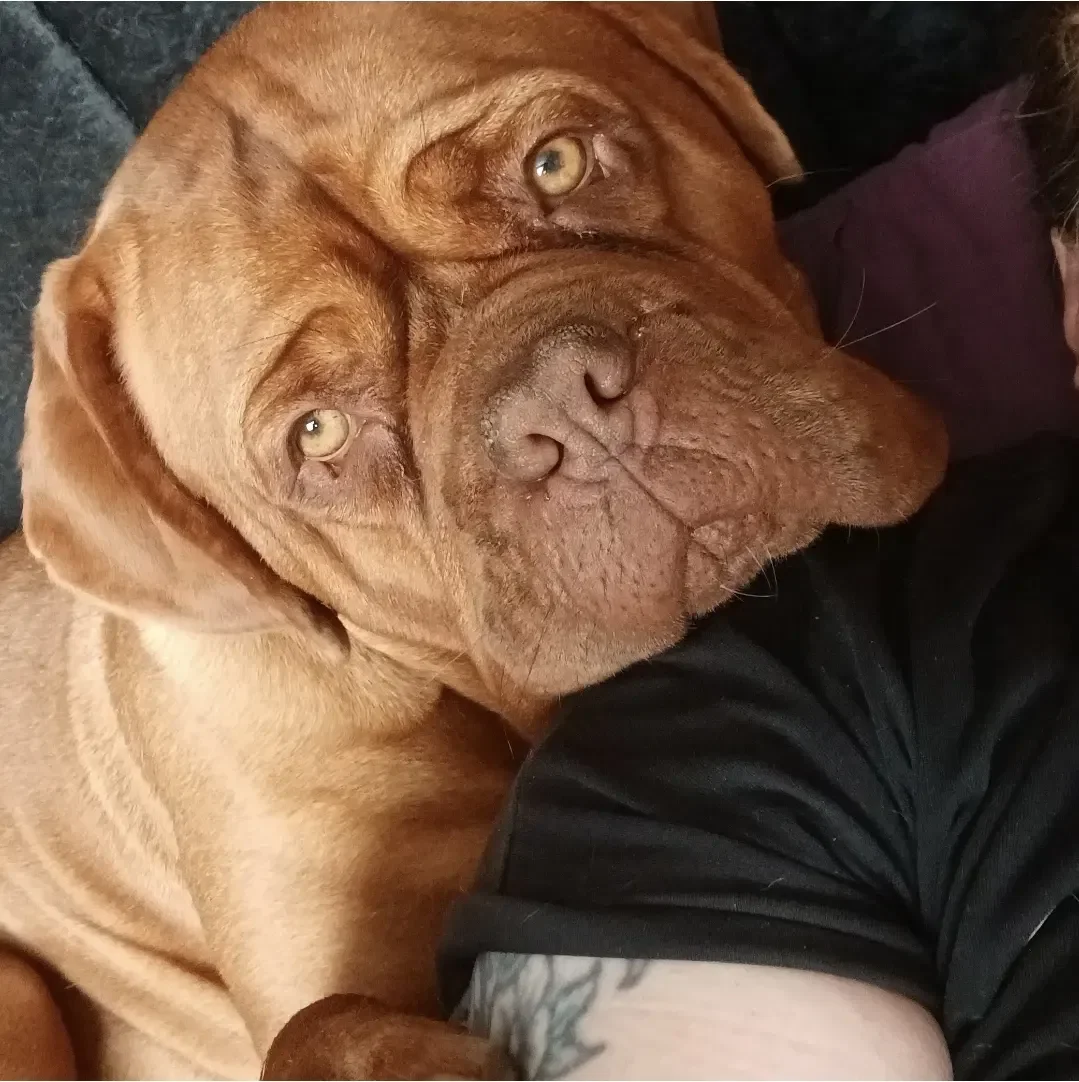
I'm writing this one from the inside.
My Dogue de Bordeaux, Millie, is being treated for lymphoma. Her mum, Marnie, died of cancer not even two years ago. So when I talk about grieving someone who's still here, I'm not describing it from across a consulting room. I'm doing it. Right now. Probably while she's asleep at my feet.
This thing has a name. Anticipatory grief. And if you're in it too, whether that's for a person or an animal, I want to talk about it properly, because most people don't.
What anticipatory grief actually is
It's grief that arrives before the loss does.
It starts at the diagnosis. Or the scan result. Or the day you notice they're slower on the walk than they used to be and something in you goes cold. From that point on you're grieving, even though nothing has ended yet.
It happens with terminal illness. It happens with dementia, where you lose someone in pieces. It happens with relationships that are ending slowly. And it absolutely happens with pets, which is where a lot of people get told, one way or another, that they're overreacting. They're not. Neither are you.
It feels like grief because it is grief. The tears at odd moments. The lump in your throat over a meal or a look they give you. The guilt of crying about someone who's sitting right there.
Why it feels so wrong
We've been taught grief comes after. So when it turns up early it feels out of order, like you've jumped the queue. She's still here. I shouldn't be feeling this yet.
I've said that to myself more than once this year.
But loss doesn't only happen at the end. Every appointment is a small loss. Every change you notice. Every time you catch yourself doing the maths on how long. You're not grieving one big thing in advance. You're grieving a hundred small things as they happen, and your mind is trying to get ready for the big one whether you want it to or not.
And you're doing all of this while life carries on. Work still needs doing. Other people still need you. You're carrying something enormous that nobody can see, and that's a very particular kind of tired.
What it looks like day to day
It isn't always crying. Mostly it's quieter than that. See if any of this sounds familiar:
Watching them constantly. Checking their breathing. Checking they've eaten. Checking again.
Not being able to concentrate on anything, because your mind keeps drifting back.
Avoiding people, because you don't know how to do small talk with this going on.
Being angry, then feeling terrible for being angry.
Planning everything. Researching everything. Because it's the one bit you can control.
Really lovely moments of just being with them, followed by a wave of dread.
If you're nodding at any of that, you're not losing it. You're grieving. Your mind is doing what minds do with something they can't make sense of.
What actually helps
I won't pretend there's a way round this. There isn't. But there are things that make it more bearable, and I'm leaning on all of them.
Give it its name. Saying "this is anticipatory grief" out loud takes some of the weight out of it. It stops being a strange thing wrong with you and becomes a known thing that other people have walked through.
Stop trying to save it for later. The instinct is to hold it together and deal with it "when the time comes." In my experience that just makes it heavier. Letting some of it out, in small doses, somewhere safe, isn't weakness. It's how grief moves through rather than piling up.
Come back to now when you can. Grief drags you into the future. What's coming, what you'll lose, what the house will feel like. When you catch yourself there, come back. The warm weight of her head on your knee. The favourite programme. The quiet evening. That's not denial. That's the whole point of the time you've got.
Put it somewhere. Grief held completely on your own is the heaviest sort. A friend who'll listen. A notebook. A therapist. Someone else who's been through it. It doesn't much matter which, as long as it isn't only in your head.
Tell people what you need. The people around you probably want to help and have no idea how. "I need to talk about this" or "I don't want advice, I just want you here" gives them a way in.
When it's worth getting some help
Plenty of people get through anticipatory grief with the people around them. Others find it takes over. The watching becomes constant. Sleep goes. The dread sits on your chest all day.
That's where working with someone can help. With clients I don't go digging through the past. I work with how the grief is running now: the way it's showing up in the body, in sleep, in the loop of thoughts you can't switch off, in the exhaustion of holding it all together. Those are patterns the mind has learned in response to something frightening, and learned patterns can be eased.
You don't have to wait until after. The before is hard too.
You're not doing this wrong
If you're reading this because someone you love is ill, or because you're watching something precious slip away, hear this:
There's no right way to do it. There's no timeline. There's no amount of grief that means you love them too much, or not enough, or wrongly.
You're carrying something real. Carrying it alongside them, for as long as you've got them, is one of the hardest and most loving things a person can do.
I know, because I'm doing it too.
Bonnie Silverback is a hypnotherapist based in Suffolk, working with trauma, anxiety and emotional wellbeing in adults and children. If you're navigating grief or anticipatory loss and would like support, you can get in touch here.
