Men's Mental Health: Why So Many Men Are Struggling in Silence — and What Can Actually Help

There's something I want to say to the men who find their way to this page — and particularly to the ones who've been quietly carrying something for a very long time.
You are not weak for struggling. You are not broken for feeling this way. And you are not less of a man for needing support.
What you are, in all likelihood, is someone who was taught — by culture, by upbringing, by a thousand subtle messages — that the right thing to do was to get on with it. To push through. To be fine.
And that message, however well-intentioned, has cost men dearly.
The Numbers Behind the Silence
Men's mental health is one of the most significant and most under addressed public health issues in the UK. The statistics are stark.
In 2023, the male suicide rate in England and Wales reached 17.4 deaths per 100,000 people — the highest recorded since 1999, according to the Office for National Statistics. To put that into perspective: men are three times more likely to die by suicide than women.
Three quarters of all suicides in the UK are men. This has been the case, consistently, since the mid-1990s.
And yet — only 36% of referrals to NHS Talking Therapies are for men (Mental Health Foundation). Men are accessing support at barely half the rate their numbers would suggest.
A survey by the Priory found that as many as 40% of men have never spoken to anyone about their mental health — despite more than three quarters reporting common symptoms like anxiety, stress or depression.
Men aged 40 to 49 carry the highest suicide rates of any demographic in the UK. Not teenagers. Not older adults. Men in their middle years — often at the height of their responsibilities, outwardly holding it together, privately falling apart.
These numbers do not reflect that men suffer less. They reflect that men are far less likely to ask for help.
Why Men Don't Reach Out
Understanding why is as important as understanding that it's happening.
This isn't about individual men being unwilling or stubborn. It's about what happens when you grow up being told — directly and indirectly — that emotional vulnerability is dangerous.
The cultural script is relentless. Boys are told not to cry. Men are praised for stoicism. Weakness is something to be ashamed of. These messages are absorbed early and deeply — not as conscious beliefs but as something more like subconscious law. The result is that when a man is struggling, his internal response isn't just I feel bad — it's I shouldn't feel bad, quickly followed by something must be wrong with me for feeling this.
That shame layer is often what makes men suffer in silence for so long. The pain is real. The belief that it's safe to talk about it simply isn't there.
Men are also more likely to express distress differently. Where women may more readily identify emotional symptoms — sadness, anxiety, tearfulness — men more often present with what look like behavioural responses: irritability, anger, withdrawal, increased alcohol use, throwing themselves into work, risk-taking. These don't look like depression on the surface. They don't look like trauma. And because they don't fit the cultural image of what mental health struggle looks like, they often go unrecognised — by the man himself and by those around him.
The help-seeking system itself can feel inaccessible. Talking therapy, as traditionally offered, asks people to sit down and talk about their feelings. For a man who has spent decades learning not to do exactly that, this is an enormous barrier — even when the pain is severe. The format doesn't always fit.
What Men Are Actually Carrying

When men do come to therapy — when they
push through the reluctance — what I find,
consistently, is not
someone who lacks depth or self-awareness.
I find someone who has been managing a
great deal, for a long time, alone.
The men I work with come with a wide range of experiences:
Trauma that was never named as such. Childhood that was difficult but "not that bad." A father who was absent or frightening. Experiences of abuse — physical, emotional, or sexual — that they've never told anyone about. Accidents, assaults, or events they've never really processed. These experiences don't disappear just because they've never been spoken. They live in the nervous system, quietly shaping behaviour and responses for years.
Anxiety that presents as anger, control, or achievement. Men who seem driven, high-functioning, or even intimidating from the outside — who are running on anxiety internally. The constant need to be productive, the difficulty relaxing, the irritability that flares without warning. Anxiety doesn't always look like worry. Sometimes it looks like never being able to switch off.
Grief that has had no outlet. Loss of a parent, a relationship, a sense of purpose — carried quietly because the expectation was to move on. Grief that was never fully felt tends not to resolve. It lodges in the body, in mood, in a flatness that can look like depression.
Relationship and identity pressure. The sense of not being enough — as a partner, a father, a provider, a man. The pressure to hold it together for everyone else while quietly feeling lost. Questions about who you actually are, beneath the role you've always played.
Burnout, chronic stress, and physical symptoms. Back pain, headaches, poor sleep, IBS — physical symptoms with no clear medical cause are often the body's way of expressing what hasn't been allowed expression in any other way. Chronic pain and emotional pain are more connected than we tend to acknowledge.
Why the Standard Approach Doesn't Always Work for Men
The traditional model of therapy — weekly sessions of talking through feelings over months or years — has genuine value. But it isn't the only model, and it isn't always the right one.
There are several reasons men often find it difficult to engage with or benefit from traditional talking therapy:
The requirement to identify and articulate emotions in the moment puts many men in a double bind — they're being asked to do, in a therapy room, the very thing they've spent decades learning not to do. The vulnerability required can feel overwhelming before trust has been established.
For men who have experienced trauma, retelling what happened — particularly in detail, repeatedly — can feel retraumatising rather than helpful. Many men drop out of therapy at precisely this point.
And for men who intellectually understand their patterns — who can explain exactly why they do what they do — talk therapy can start to feel like turning the problem over and over without resolution. The insight is there. The change isn't.
This isn't a failure of the person. It's a mismatch between the approach and where the problem actually lives.
Trauma, anxiety, and deeply held emotional patterns don't primarily live in the thinking mind. They live in the subconscious, the nervous system, the body. Approaches that work at that level tend to produce faster, more lasting change — and often feel more accessible to men, because they don't require sustained emotional narration.
How I Work with Men: IEMT and the BLAST Technique
The approaches I use most in my work — IEMT and the BLAST Technique — are both particularly well-suited to how many men experience and express distress.
IEMT — Integral Eye Movement Therapy
IEMT uses specific guided eye movement patterns to change how memories and emotional experiences are stored in the nervous system. It works at a neurological level — not a verbal one.
What this means in practice is that clients don't need to narrate their experiences in detail. We're not doing a verbal debrief of what happened. We're working with the emotional and neurological structure of the memory directly — changing how it's coded, reducing its intensity, and interrupting the patterns it has been driving.
For men who have carried difficult experiences for years but have never talked about them — or who have talked about them without feeling any different — IEMT offers a different kind of entry point. The work can happen without requiring sustained emotional disclosure.
After IEMT, memories that once felt charged, intrusive, or impossible to move past often become quieter. More distant. Something that happened — rather than something that is still happening.
The BLAST Technique — Bi-Lateral Analysis and Stimulation Treatment
BLAST uses bilateral stimulation to help the brain and body complete the processing of traumatic or overwhelming experiences — the step that didn't happen at the time, because the experience was too much.
For men who have been told they have anger issues, or who notice that they react more intensely than they think they should — this often isn't a character flaw. It's a nervous system that hasn't been able to complete its processing of something. The intensity of the reaction is a signal, not a verdict.
BLAST works at exactly that level — helping the system finally do what it needed to do, so the reaction can settle.
Hypnotherapy for Integration
Once the acute charge of a memory or pattern has reduced through IEMT or BLAST, hypnotherapy supports what comes next. Installing a genuine sense of safety. Building a different relationship with the self. Helping men step out of the roles they've played — the one who holds it together, the strong one, the one who doesn't need anything — and into something more honest and more free.
What Change Actually Looks Like
I want to be honest about what therapy can and can't do.
It can't undo what happened. It can't rewrite the past.
What it can do — and what I see in men who come and do the work — is change the relationship with what happened. So that it stops running the show from the inside.
Men I've worked with describe it in various ways:
"I'm not angry all the time anymore."
"I can actually sleep."
"I don't know how to explain it — I just feel lighter."
"I stopped waiting for something to go wrong."
These are not small things. These are the things that change a life — a relationship, a family, a career. The ripple effects of one man getting support can be enormous.
Asking for help isn't the end of something. It's often the beginning of becoming who you actually are, underneath everything you've been carrying.
A Note on Men's Mental Health and the People Who Love Them
If you're reading this because you're worried about a man in your life — a partner, a son, a brother, a friend — a few things are worth knowing.
Telling someone to "just talk about it" rarely works on its own, especially if they've spent decades learning that talking is unsafe. Reducing the barrier matters more than increasing the pressure. You don't need them to sit down and have a full emotional conversation. You need to make it clear — through patience, through not reacting to expressions of distress with alarm or judgment — that it's safe to be honest.
Asking direct, simple questions often works better than open-ended ones. Not "how are you feeling?" — which can be too vast to answer — but "you've seemed a bit flat lately. Are you okay?" Direct, calm, without drama. Men who are struggling often respond better to a specific prompt than to an open door.
And if the pain seems serious — if there's withdrawal, anger that's escalating, substances being used in ways that seem out of character, or any talk of hopelessness — please take that seriously and encourage them to seek professional support sooner rather than later.
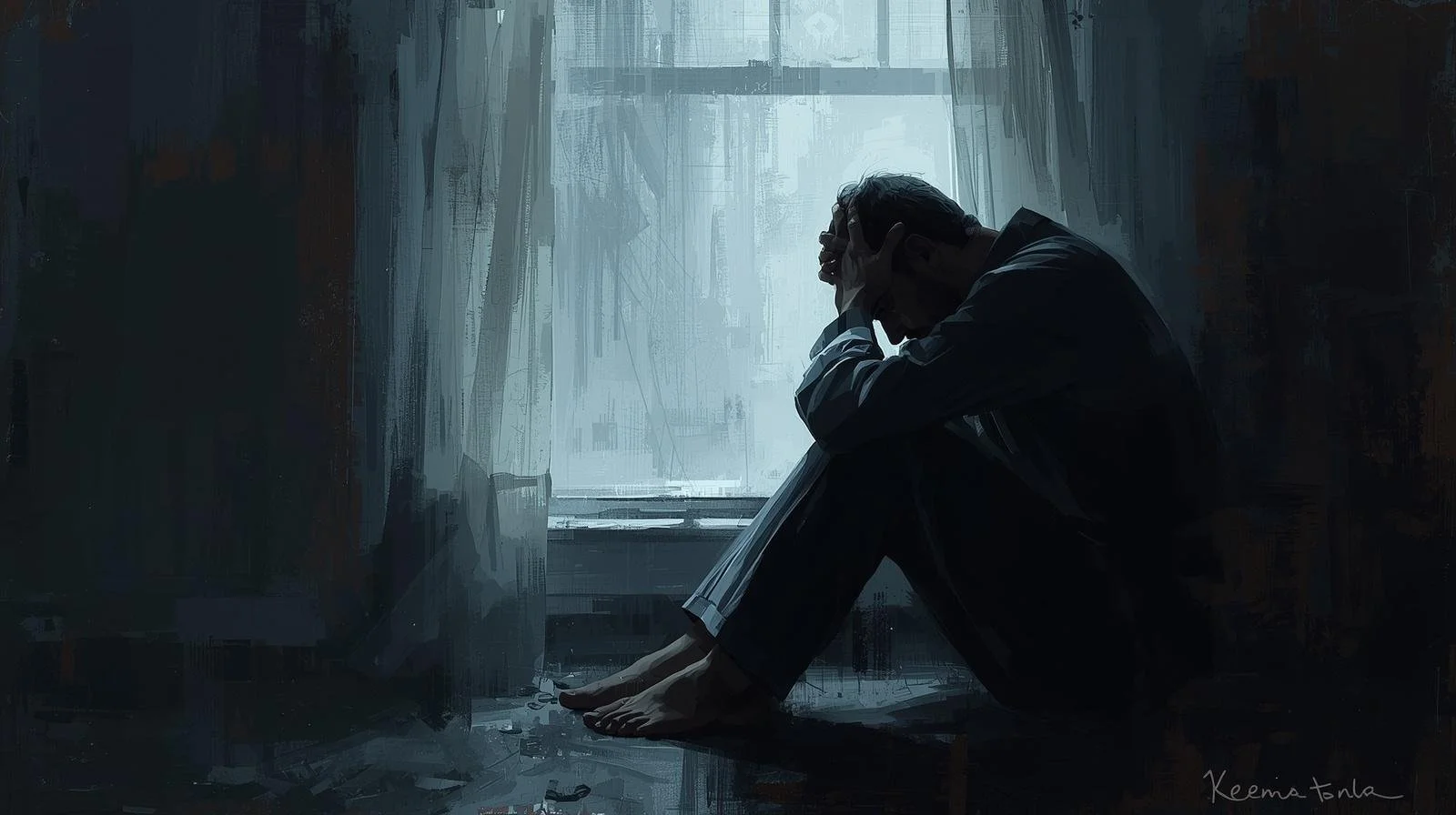
UK Support Resources for Men's Mental Health
If you're ready to reach out, these UK organisations offer support:
Samaritans — available 24/7, free to call on 116 123. No judgement. No requirement to be in crisis.
CALM (Campaign Against Living Miserably) — specifically for men. Helpline and webchat: 0800 585858
Andy's Man Club — free peer support groups for men across the UK. No pressure to talk, just a space to show up.
Mind — information, support and local services across England and Wales.
Movember Foundation — resources and signposting for men's mental health.
NHS Mental Health Services — speak to your GP for a referral, or call NHS 111 option 2 in a mental health crisis.
Frequently Asked Questions
Is hypnotherapy suitable for men who are sceptical about therapy?
Yes — and scepticism is completely understandable. I don't ask anyone to believe in anything before we start. The approaches I use — IEMT and the BLAST Technique — are practical, grounded, and results-focused. Many of the men I work with initially came with significant doubts. The work speaks for itself.
Do I have to talk about what happened in detail?
No. IEMT and the BLAST Technique work at a neurological and subconscious level — not through extensive verbal recounting. Many men find this one of the most important things to hear. You don't have to relive it to resolve it.
How quickly does this work?
Many clients notice significant change within two to four sessions. The speed depends on the nature and history of what's being worked with, but the approaches I use are designed for efficiency — not open-ended processing. I offer a free 30-minute consultation to discuss what's realistic for your specific situation.
Is this just for trauma, or can it help with anxiety and anger too?
All of it. Anxiety, anger, low mood, burnout, relationship difficulties, chronic stress — these often have the same underlying nervous system driver. The work addresses what's at the root, rather than managing symptoms at the surface.
I'm not sure what I'd even say. Is that okay?
Completely. You don't need to arrive with a clear explanation of what's wrong. Many clients simply know something isn't right and don't know how to name it. That's enough to start.
Can I access sessions online if I don't want to travel?
Yes. I offer sessions online across the UK. Many clients, particularly men who are managing busy lives or aren't ready to walk into a therapy room, find online sessions more manageable as a first step. They work just as well.
You Don't Have to Keep Carrying This Alone
If you've read this far — even if part of you is telling you this isn't for you, or that you should be fine — I'd ask you to pay attention to the part that kept reading.
That part knows something needs to change.
Start with a conversation. No pressure, no commitment, no performance required. Just a space to say what's actually going on, and to find out whether I can help.
[Book Your Free 30-Minute Chat → https://www.bonniesilverback.com/book-with-me
Or explore the free A–Z Trauma Guides — including guides on unresolved trauma, hypervigilance, anger, and shame — available completely free.
[Download the Free Guides → https://subscribepage.io/A-Z-GUIDES
